How to Size Cabinet Pulls and Knobs
Cabinet hardware that is the right size makes a kitchen look intentional. Hardware that is too small looks like an afterthought, and hardware that is too long crowds the drawer front. Here is how to size pulls and knobs with confidence.
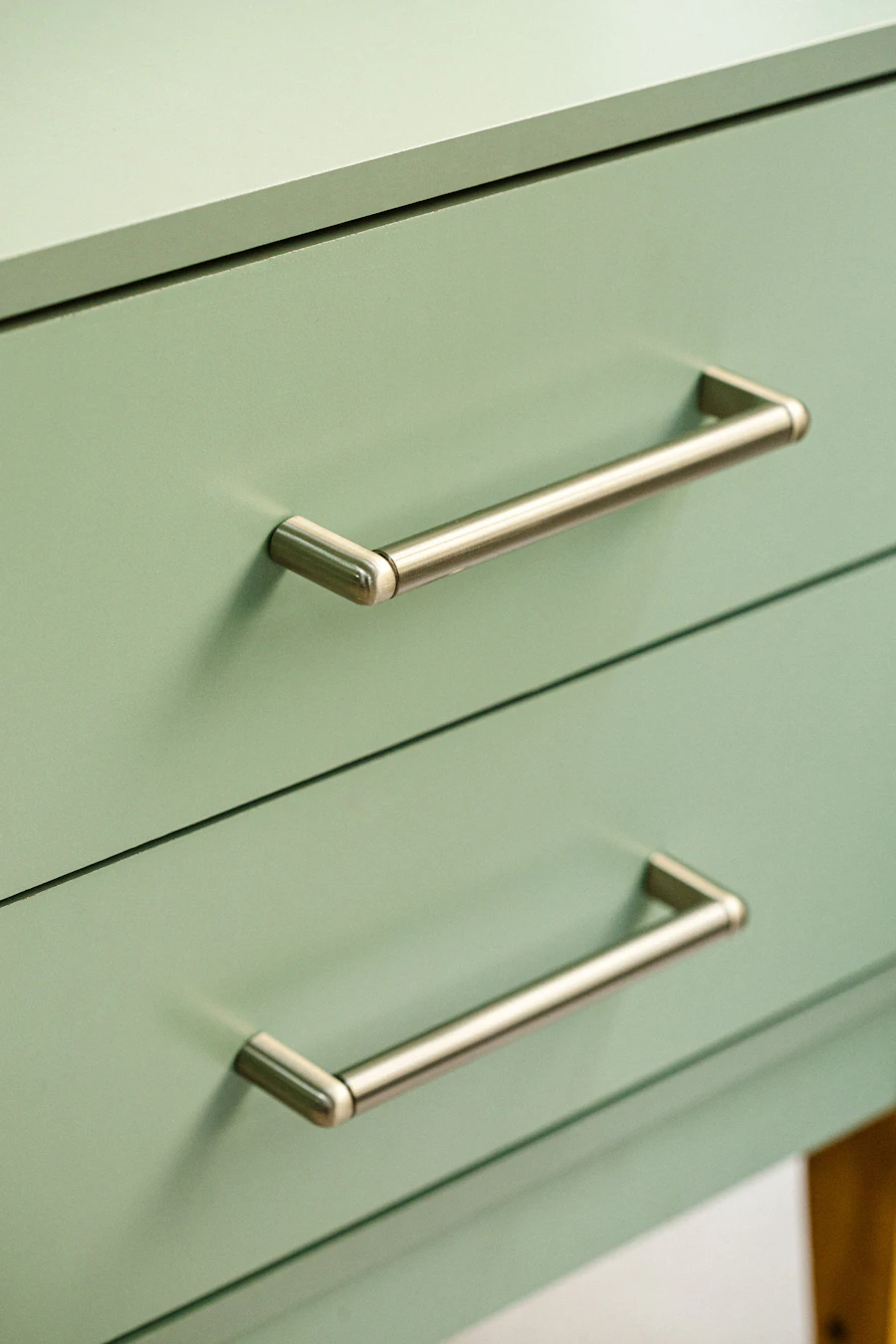
Know the two measurements
A pull has two sizes, and they are easy to mix up. The center-to-center (often written C-C or CC) is the distance between the centers of the two screw holes. This is the number that matters if you are replacing hardware, because new pulls must match the existing holes or you will need to fill and redrill. The overall length is the full length of the pull, end to end. It is always longer than the center-to-center, and it is the number that affects how the pull looks.
Common center-to-center sizes in the US are 3 inches, 3-3/4 inches (96 mm), 5 inches (128 mm), 6-5/16 inches (160 mm), 7-9/16 inches (192 mm) and longer bar sizes for appliances and tall drawers.
The one-third rule
A reliable starting point is to choose a pull whose overall length is about one third of the drawer width. On an 18 inch drawer that suggests a pull around 6 inches long. On a 30 inch drawer, about 10 inches. The rule is a guide, not a law: slim, modern bar pulls often look right a little longer, and chunky traditional cup pulls look right a little shorter.
Drawers, doors and wide fronts
- Standard drawers (12 to 24 inches wide): one pull, centered horizontally.
- Wide drawers (over about 24 to 30 inches): either one longer pull or two pulls, each placed about a quarter of the width in from each side. Two pulls make heavy, wide drawers easier to open evenly.
- Cabinet doors: a knob or a vertical pull near the corner opposite the hinge, usually 2 to 3 inches from the top on base cabinets and from the bottom on wall cabinets.
- Tall pantry and appliance doors: appliance pulls, often 12 to 24 inches center-to-center, mounted vertically.
Knob sizes
Most cabinet knobs fall between 1 and 1-1/2 inches in diameter. 1-1/4 inches is the most common size and works on almost every door and small drawer. Larger knobs suit large doors and traditional kitchens, while smaller knobs suit furniture-scale pieces and bathroom vanities.
Mixing knobs and pulls
A common and balanced approach is knobs on doors and pulls on drawers, all in the same finish and family. Another is pulls everywhere, with longer pulls on wider drawers. Whichever you choose, keep the finish and the style consistent across the room so the cabinetry reads as one design.
Before you order
- Count every door and drawer, and note each drawer width.
- If replacing, measure existing center-to-center precisely, ideally in millimeters.
- Check the drawer front thickness. Most pulls ship with screws for fronts about 3/4 inch thick, and thicker fronts may need longer screws.
- Order one sample first if you can, and hold it against the cabinet before buying the full set.
Recommendations in our guides may link to retailers. See our affiliate disclosure.