Unlacquered Brass, Explained
Unlacquered brass is solid brass with no clear protective coating. It is sometimes called a living finish because it changes with time and touch. For many designers that change is the point. For others it is a surprise. Here is what to expect.
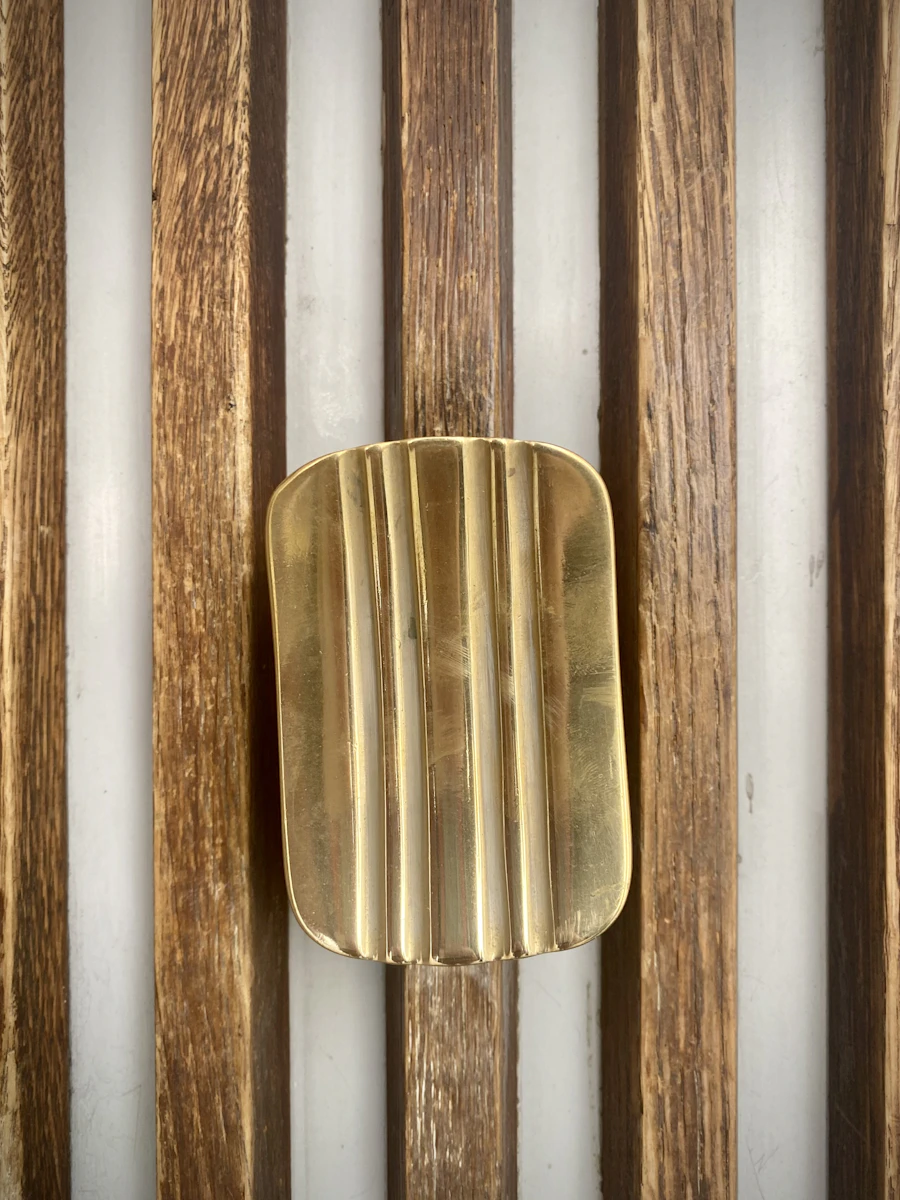
Lacquered versus unlacquered
Most bright brass hardware is protected by a thin clear lacquer that keeps the metal looking the same for years, until the coating wears or chips. Unlacquered brass leaves the metal exposed. Air, moisture and the oils from hands react with the copper in the brass, and the surface slowly darkens from bright gold toward warm amber, brown and, in damp places, sometimes green.
How it ages
Change is fastest where hardware is handled most and where there is moisture. Kitchen pulls and front door levers develop character within months, while a rarely used cabinet knob may stay bright much longer. The result is uneven by nature: high points are polished by touch while recesses darken. That variation is what gives an older house its warmth.
Caring for it
- To let it age: wipe with a soft dry or slightly damp cloth. Avoid harsh cleaners, which can leave blotchy marks.
- To restore the shine: use a brass polish and a soft cloth, then wipe off all residue. You can polish as often or as rarely as you like.
- Avoid: abrasive pads and bleach-based cleaners.
Where it works best
Unlacquered brass suits traditional and transitional kitchens, period houses, bars, and anywhere the owner enjoys materials that show their age. It is a less comfortable choice for someone who wants every pull to match exactly for years, or for rental properties where tenants may expect a uniform finish. For those, a lacquered satin brass or a PVD brass finish holds its color.
Pairing it with other materials
Unlacquered brass sits naturally with painted cabinetry in deep greens, blues and warm whites, with natural oak and walnut, and with marble and soapstone. It also pairs well with aged faucets and lighting, so consider the whole room when you choose.
Recommendations in our guides may link to retailers. See our affiliate disclosure.